


Inside: Understanding pH • How to raise pH • Signs to call a professional • FAQ
Maintaining the correct pH level in your swimming pool is essential for both the longevity of the pool equipment and the comfort and safety of swimmers. A balanced pH ensures that the sanitizers work effectively, prevent corrosion or scaling, and keep the water clear and inviting. This article will guide you through the steps to safely and efficiently raise the pH in your swimming pool.
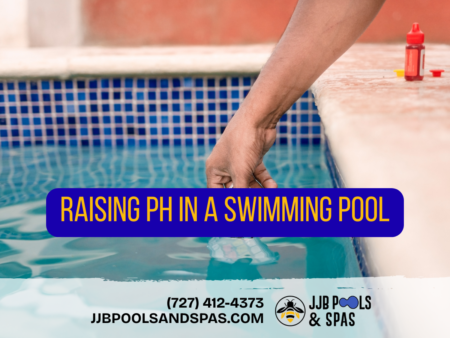
Understanding pH Levels
pH Scale Overview: The pH scale ranges from 0 to 14, with 7 being neutral. Values below 7 are considered acidic, and values above 7 are alkaline (or basic). For swimming pools, the ideal pH range is between 7.4 and 7.6.
How Tampa Bay’s Climate Affects Pool pH Levels
Owning a swimming pool in the Tampa Bay area comes with unique water chemistry challenges. Florida’s frequent rainstorms, high humidity, intense sun exposure, and year-round pool use can all cause your pool’s pH levels to drop faster than expected.
Heavy rainfall — especially during Tampa Bay’s rainy season and summer thunderstorms — is slightly acidic and can dilute your pool water, lowering pH. Add in frequent swimming, sunscreen, leaves, pollen, and debris, and it’s common for local pools to need more frequent pH adjustments than pools in cooler or drier climates.
Why Low pH Is Common in Tampa Bay Pools
Low pH is one of the most common water balance issues we see in Tampa Bay swimming pools. Some of the biggest contributors include:
- Frequent rain and tropical storms that dilute pool water
- High swimmer usage year-round due to Florida’s warm weather
- Acidic debris like palm fronds, oak leaves, and pollen
- Saltwater chlorine generators, which can impact overall water balance
- Improper chemical dosing after storms or pool parties
Because pools in the Tampa Bay area are rarely “closed” for the season, regular testing and proactive adjustments are key to preventing ongoing pH problems.

Why pH Balance Matters:
Sanitizer Efficiency: Chlorine works best within the ideal pH range. Low pH levels can cause chlorine to dissipate quickly.
Swimmer Comfort: Low pH can cause eye and skin irritation.
Equipment Longevity: Acidic water can corrode metal parts, plumbing, and other pool equipment.
How Often Should Tampa Bay Pool Owners Test pH?
For pools in the Tampa Bay region, we recommend testing pH at least 2–3 times per week, especially during:
- Summer heat waves
- Rainy season (June–September)
- After heavy storms or hurricanes
- Following pool parties or increased swimmer load
Local weather conditions can change water chemistry quickly, and catching low pH early helps prevent damage to pool surfaces, equipment, and plumbing.
Testing the pH Level
Before making any adjustments, it’s crucial to accurately test your pool’s current pH level.
Steps to Test pH:
- Gather Supplies: Use a reliable pool testing kit or digital pH meter.
- Collect Water Sample: Take a sample from about 18 inches below the water surface, away from return jets or skimmers.
- Conduct the Test: Follow the instructions provided with your testing kit.
- Record the Results: Note the pH level to determine how much adjustment is needed.
Raising the pH Level
If your pool’s pH is below 7.4, it’s time to raise it. The most common chemicals used to increase pH are sodium carbonate (soda ash) and sodium bicarbonate (baking soda).
Sodium Carbonate (Soda Ash)
- Purpose: Primarily raises pH with a minor effect on total alkalinity.
- When to Use: Ideal when pH is low but total alkalinity is within the acceptable range.
How to Add Sodium Carbonate:
- Calculate the Amount Needed: Typically, adding 6 ounces of soda ash per 10,000 gallons of water will raise the pH by about 0.2 units.
- Prepare the Chemical: Always read the manufacturer’s instructions. Wear protective gear.
- Distribute Evenly: Sprinkle the soda ash over the surface of the pool, focusing on areas away from the skimmers.
- Allow for Circulation: Run the pool pump for at least 4 hours to ensure proper mixing.
- Retest the pH: After the circulation period, retest to see if further adjustment is needed.
Sodium Bicarbonate (Baking Soda)
Purpose: Raises total alkalinity and slightly increases pH.
When to Use: Best when both pH and total alkalinity are low.
How to Add Sodium Bicarbonate:
- Calculate the Amount Needed: Adding 1.5 pounds per 10,000 gallons raises total alkalinity by about 10 ppm and slightly increases pH.
- Dissolve Before Adding: For best results, dissolve the baking soda in a bucket of pool water.
- Pour Around the Perimeter: Slowly pour the solution around the edge of the pool.
- Circulate the Water: Keep the pump running for at least 4 hours.
- Retest Levels: Check both pH and total alkalinity to ensure they are within the ideal ranges.
Raising Pool pH After Heavy Rain or Storms in Tampa Bay
After a strong Tampa Bay rainstorm, it’s important to test your pool water before adding any chemicals. Rainwater can lower pH and throw off total alkalinity at the same time.
Steps Tampa Bay pool owners should take after storms:
- Remove debris from the pool and skimmers
- Test pH and alkalinity once the pump has circulated water
- Add pH increaser (soda ash) slowly, following dosage guidelines
- Retest after several hours of circulation
Storm prep and post-storm testing are especially important during hurricane season when water chemistry can shift dramatically overnight.
Saltwater Pools & pH Management in the Tampa Bay Area
Saltwater pools are extremely popular throughout Tampa Bay, but they often experience rising or fluctuating pH levels due to chlorine generation and aeration from water features.
If your saltwater pool’s pH drops too low, it may be related to:
- Recent rainfall
- Acidic chemical additions
- Inconsistent salt cell output
Maintaining proper pH helps protect salt cells, pool heaters, and finishes — especially in Florida’s heat.
How Proper pH Protects Pool Surfaces in Florida’s Climate
Low pH can be especially damaging to pools in Tampa Bay due to constant sun exposure and warm water temperatures. Acidic water can lead to:
- Etching on plaster surfaces
- Staining on tile and grout
- Corrosion of metal components
- Shortened lifespan of heaters and pumps
Keeping your pool’s pH balanced helps protect your investment and reduces costly repairs over time.
When Tampa Bay Pool Owners Should Call a Professional
If your pool’s pH keeps dropping despite regular testing and chemical adjustments, there may be an underlying issue with circulation, water balance, or equipment.
You should consider professional pool service if:
- pH drops repeatedly within days
- Water causes eye or skin irritation
- Pool surfaces feel rough or etched
- Equipment shows signs of corrosion
A local Tampa Bay pool professional can diagnose the issue and stabilize your water chemistry safely.
Tips and Precautions
- Add Chemicals Gradually: It’s easier to add more if needed than to correct an over-adjustment.
- Avoid Overcorrection: Raising pH too high can lead to scaling and cloudy water.
- Maintain Total Alkalinity: Keep total alkalinity between 80-120 ppm to buffer pH changes.
- Safety First: Always wear gloves and eye protection when handling pool chemicals.
- Store Chemicals Properly: Keep in a cool, dry place away from children and pets.
Why is pool alkalinity important?
Alkalinity plays a crucial role in maintaining the chemical balance of your pool water. It acts as a buffer for pH levels, helping to stabilize them and prevent sudden fluctuations that can cause issues.
Frequently Asked Questions About Raising Pool pH in Tampa Bay
Why does my pool’s pH keep dropping in Tampa Bay?
Tampa Bay pools experience frequent pH drops due to heavy rainfall, high humidity, intense sun exposure, and year-round swimming. Rainwater is slightly acidic and can dilute your pool water, while sunscreen, debris, and frequent use all contribute to lower pH levels in Florida pools.
How often should I test my pool’s pH in the Tampa Bay area?
Because of Tampa Bay’s warm climate and unpredictable weather, pool owners should test pH at least 2–3 times per week, and always after heavy rain, storms, or pool parties. During summer and rainy season, more frequent testing helps prevent damage to surfaces and equipment.
What is the ideal pH level for pools in Florida?
For Tampa Bay pools, the ideal pH range is 7.2 to 7.6. Staying within this range helps protect pool finishes, heaters, pumps, and plumbing while keeping the water comfortable for swimmers.
Can heavy rain or hurricanes affect my pool’s pH?
Yes. Heavy rain and tropical storms common in Tampa Bay can significantly lower pH and total alkalinity. After storms, always remove debris, run the pump to circulate water, and test pH before adding chemicals.
What’s the best way to raise pH in a Tampa Bay swimming pool?
The most common way to raise pH is by adding a pH increaser (soda ash) according to your pool size. For minor adjustments, aerating the water by aiming return jets upward can also help raise pH without drastically increasing alkalinity.
Is baking soda good for raising pH in Florida pools?
Baking soda primarily raises total alkalinity and only slightly increases pH. In Tampa Bay pools with low pH but normal alkalinity, soda ash is usually the better choice. Using the wrong product can create ongoing water balance issues.
How long should I wait before retesting pH after adding chemicals?
In Tampa Bay pools, wait at least 4–6 hours after adding pH increaser and ensure the pump is running for proper circulation. Retesting too soon can give inaccurate readings.
Are saltwater pools in Tampa Bay affected differently by pH changes?
Yes. Saltwater pools are popular throughout Tampa Bay and can experience pH fluctuations due to chlorine generation, aeration, and frequent rain. Maintaining balanced pH is critical to protect salt cells and prevent scaling or corrosion.
What happens if pH stays too low for too long?
Chronic low pH can cause:
- Etching of plaster surfaces
- Staining and discoloration
- Corrosion of heaters, ladders, and pumps
- Eye and skin irritation for swimmers
Florida’s warm water temperatures can accelerate this damage if pH isn’t corrected promptly.
When should I call a Tampa Bay pool professional for pH issues?
If your pool’s pH continues to drop despite regular testing and chemical adjustments, it may indicate circulation, alkalinity, or equipment issues. A local Tampa Bay pool professional can properly diagnose the problem and stabilize your water chemistry.
Should I adjust pH before or after adding chlorine?
In Tampa Bay pools, it’s best to adjust pH first, then add chlorine. Proper pH helps chlorine work more effectively, especially in Florida’s high heat and sun exposure.
Do I need professional pool service during rainy season?
Many Tampa Bay pool owners choose professional service during rainy season because frequent storms can quickly throw off water balance. Routine service helps prevent chemical overuse, surface damage, and equipment wear.
Regular monitoring and maintenance of your pool’s pH level ensures a safe and enjoyable swimming environment. By understanding how to test and adjust pH levels, you can prevent common pool problems and extend the life of your pool equipment. Remember to make adjustments slowly and retest frequently to maintain the ideal pH balance.
If you require professional assistance with equipment repairs, installations, or even pool construction and remodels, JJB Pools & Spas offers a range of services to help keep your pool in excellent condition.
Picture Credit: iStock
JJB Pools & Spas provides expert pool maintenance, pool repair, pool resurfacing, pebble surfacing, and pool renovation across Tampa Bay — serving Largo, Palm Harbor, Dunedin, Belleair, South Tampa, Hyde Park, Palma Ceia, St. Pete Beach, Westchase, Odessa, Nine Eagles, Davis Islands & Clearwater Beach, and surrounding areas. We use only the best pool and spa industry brands, including Wet Edge Technologies, Primera Stone, Prism Matrix, Luna Quartz, Signature Matrix, and Aquabella Tile. JJB Pools is also a platinum warranty station for all Hayward brand equipment, and an expert in Variable Speed Pumps and energy-efficient pool heating. Call for a free estimate! (727) 412-4373