


Saltwater vs. Chlorine Pools: A Florida Homeowner’s Guide to Cost, Comfort & Maintenance
Why This Decision Matters — Especially in Florida
Choosing between a saltwater pool and a traditional chlorine pool is a major decision for Florida homeowners. Whether you live near Tampa Bay, Clearwater, Largo, or Palm Harbor, your climate influences how your pool will perform and what kind of maintenance it will require. This guide helps you compare both options to decide what works best for your lifestyle, budget, and long-term plans.
Saltwater vs. Chlorine: How the Water Feels
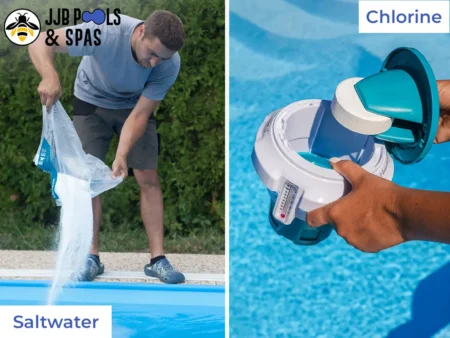
- Saltwater pools provide a softer, spa-like swim experience. The salt chlorine generator dissolves salt into chlorine — which means water tends to be gentler on skin, hair, and eyes. Frequent swimmers often describe saltwater as smoother and more comfortable.
- Chlorine pools rely on direct chemical dosing. With tablets, liquid chlorine, or shock treatments, these pools can sometimes irritate skin or eyes, especially if chlorine levels fluctuate. Some swimmers notice dryness or sensitivity.
For many Florida families who swim often (especially during long summers), the comfort difference matters — and saltwater often wins.
What are the differences in installation and operating costs?
| System | Initial Cost | Long-Term Cost & Upkeep |
| Saltwater | Higher — due to salt chlorine generator | More economical over time if you keep your pool for many years; avoids frequent chemical purchases. |
| Chlorine | Lower — no special equipment needed | Ongoing expense: chlorine tablets/liquid, frequent chemical additions. |
Saltwater pools typically require a larger up-front investment (the generator system, which needs replacing every 5–7 years).
Over decades, though, those regular chlorine costs — tablets, shocks, maintenance — can add up. If you plan to keep a pool for many years, saltwater might pay off.
Maintenance & Upkeep: What You’re Signing Up For
Saltwater pools: The generator continuously produces chlorine, so day-to-day maintenance is often easier. But you still have to monitor salt levels periodically to ensure proper generator operation.
Chlorine pools: You must routinely add chlorine (tablets or liquid) and test the water often. In Florida’s climate — hot, sunny, often rainy — that water balance can shift quickly. Especially after rain, you may need more adjustments.
So while saltwater pools may feel lower-maintenance, both systems require consistent attention — especially in humid climates like ours.
Florida Climate + Pool Maintenance: What to Know
Florida’s weather isn’t just about sunshine — heat, humidity, frequent summer rain, and high usage all affect pool water chemistry and maintenance demands. Some considerations for Tampa Bay area (or near Clearwater, Palm Harbor, Largo):
- Rain can dilute chlorine in traditional pools, requiring more frequent adjustments. Saltwater pools handle dilution better since the generator continues to produce chlorine.
- Because many homeowners swim often (or year-round), saltwater’s softer feel and lower chemical handling may offer better comfort and convenience.
- If you opt for saltwater, make sure fixtures, pool equipment, and pool surfaces are compatible with saltwater — to avoid long-term corrosion or wear.
Environmental Considerations: Chemicals & Sustainability
Saltwater pools generally require fewer stored chemicals, reducing the need to handle, store, or dispose of chlorine tablets or liquids. For homeowners concerned about safety, convenience, or environmental impact — that can be a plus.
Chlorine pools remain effective and manageable — if maintained correctly. Proper chemical balance and responsible storage/handling keep them safe and environmentally reasonable.
Choosing between the two often means balancing convenience and startup cost vs. environmental comfort and long-term upkeep.
What’s Best Depends on Your Plan
- If you want lower upfront cost and plan on moderate use, a chlorine pool might make sense.
- If you want long-term comfort, ease of maintenance, and plan to swim often (or year-round), a saltwater poolcould be a better investment.
- For Florida homeowners who care about soft water, reduced chemical handling, and convenience, saltwater tends to offer a more user-friendly experience.
Saltwater vs. Chlorine Pools — Florida Homeowner FAQ
Which pool system is better for the Florida climate: saltwater or chlorine?
Both systems work well in Florida, but saltwater pools tend to require fewer day-to-day chemical adjustmentsbecause the generator produces chlorine continuously. Traditional chlorine pools can need more frequent dosing during Florida’s heat and heavy rain cycles. If you want lower daily maintenance, saltwater often performs better in the Tampa Bay climate.
Do saltwater pools cost more to install in Florida?
Yes. A salt chlorine generator adds to the upfront installation cost, but many homeowners save money long-term by buying fewer chemicals. If you plan to keep your pool for many years, the higher startup cost may pay for itself.
Are saltwater pools easier to maintain?
Typically, yes — but they’re not maintenance-free. Saltwater pools require:
- Monitoring salt levels
- Occasional cleaning of the generator cell
- Regular water chemistry tests
Chlorine pools require more hands-on chemical management, especially after storms, pool parties, or long stretches of heat (all common in Florida).
Will saltwater damage my pool equipment or deck?
Modern equipment is generally designed to handle salt systems. However, older metals, cheap railings, or poorly coated fixtures may corrode faster around saltwater. If you’re upgrading an existing pool, ask a local pool professional to confirm your equipment is compatible.
What does pool water feel like in a saltwater pool?
Saltwater pools have a smoother, softer feel and are often gentler on skin, eyes, and hair. Many Florida families who swim frequently prefer saltwater because it’s more comfortable during long summer seasons.
Do saltwater pools still use chlorine?
Yes — but instead of adding tablets or liquid, the salt cell converts salt into chlorine. This keeps chlorine levels more stable, which is especially helpful during Florida’s high-usage months.
Which system is better for resale value in Florida?
Both systems are marketable, but in Tampa Bay and coastal regions, buyers often view saltwater pools as an upgradethanks to lower maintenance and a more luxurious swim feel.
Are saltwater pools safe for homes near the beach?
Yes, but you’ll want proper sealing and protective finishes around metal fixtures. Homes near the Gulf of Mexico already experience salt exposure in the air; maintaining your equipment properly prevents issues.
Is it expensive to convert a chlorine pool to saltwater?
Conversion is usually straightforward and typically involves adding:
- A salt chlorine generator
- Appropriate electrical connections
- Salt added to the pool water
Most Tampa Bay homeowners find conversion affordable compared to the long-term convenience.
How often do saltwater generators need to be replaced?
Most salt cells last 5–7 years in Florida’s warm climate, though lifespan can vary depending on pool usage and maintenance.
Which system is best for homeowners who travel or use their pool seasonally?
Saltwater pools require less daily intervention, making them ideal for busy homeowners, snowbirds, or families who want low-maintenance upkeep.
Who can help me decide what’s best for my Florida home?
A local pool professional can help you evaluate your current setup, budget, and lifestyle. If you’re in Tampa Bay, Palm Harbor, Clearwater, or nearby, JJB Pools & Spas can assist with:
- Saltwater conversions
- New pool builds
- Equipment upgrades
- Ongoing pool maintenance
Need Help Building or Maintaining a Pool in Tampa Bay?
If you’re looking for professional pool construction, renovation, or maintenance in the Tampa Bay area (serving areas like Palm Harbor, Clearwater, Largo, St. Pete, and beyond), reach out to the experienced local pool experts at JJB Pools & Spas. Their team can help you weigh saltwater vs. chlorine — and build a pool that fits your lifestyle, budget, and climate.
JJB Pools & Spas provides expert pool maintenance, repair, resurfacing, and renovation across Tampa Bay — serving Largo, Palm Harbor, Dunedin, Belleair, South Tampa, Hyde Park, Palma Ceia, St. Pete Beach, Davis Islands & Clearwater Beach. We use only the best pool and spa industry brands, including Wet Edge Technologies, Primera Stone, Prism Matrix, Luna Quartz, Signature Matrix, and Aquabella Tile. JJB Pools is also a platinum warranty station for all Hayward brand equipment, and an expert in Variable Speed Pumps and energy-efficient pool heating. Call for a free estimate! (727) 412-4373