


If you love your pool but find yourself waiting for warmer water, adding a heater could help you get more use out of it. Comfortable water temperatures can make morning swims, evening dips, and cooler days more inviting.
Many existing pools can accommodate a heater, but choosing one involves more than picking a model. Your current equipment, available utilities, backyard layout, and swimming habits all affect what makes sense.
Here’s what to consider before adding a heater to your existing pool setup.
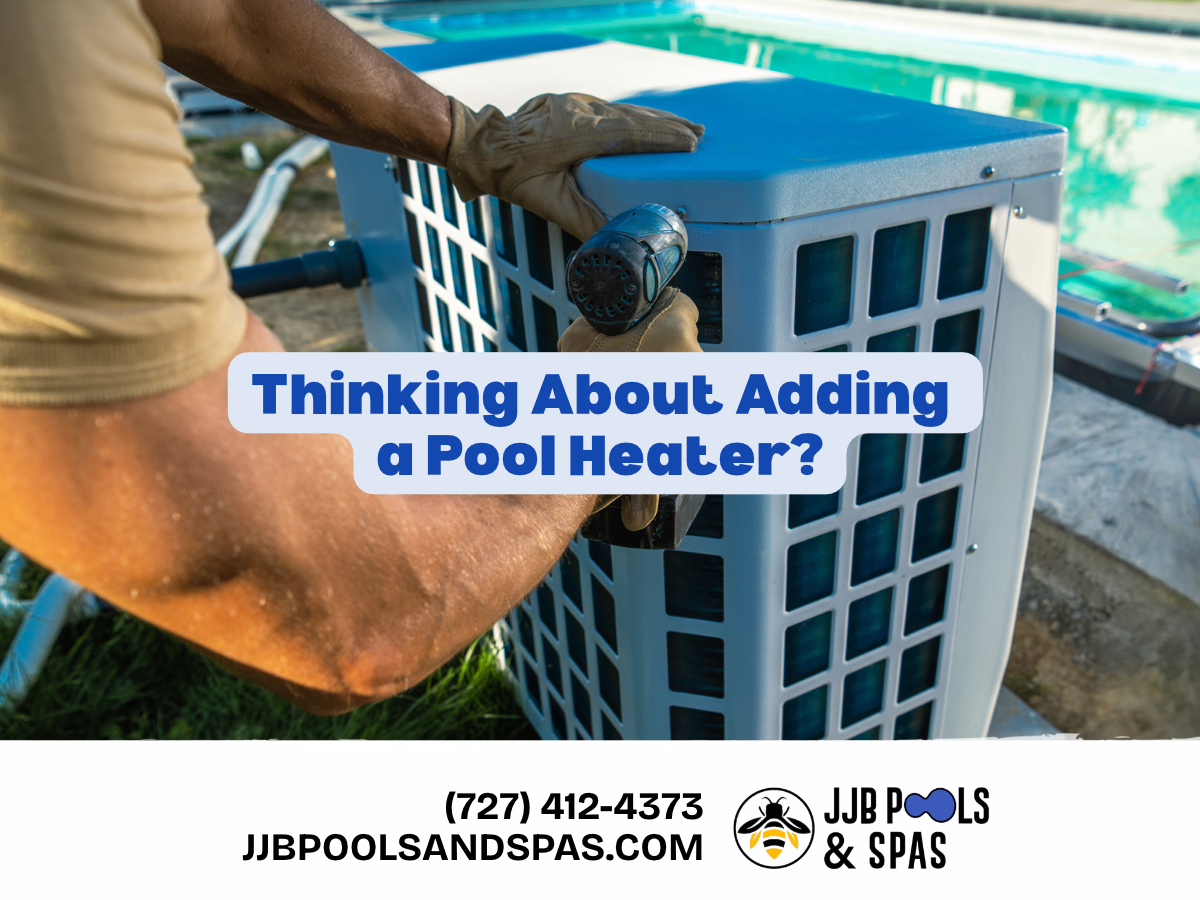
Start With How You Want to Use Your Pool
Before comparing equipment, think about what you want heating to accomplish.
Are you hoping to:
- Maintain a comfortable temperature for regular swimming?
- Warm the pool occasionally for weekends or gatherings?
- Extend your swimming season into spring or fall?
- Heat an attached spa as well as the pool?
These goals affect the type and size of heater you need. Maintaining a steady temperature throughout the week is different from warming a cool pool before guests arrive.
It also helps to choose a target water temperature. A few degrees of added warmth can require a different amount of energy than keeping the pool substantially warmer than the surrounding air.
Understand the Difference Between a Gas Heater and a Heat Pump
Gas heaters and electric heat pumps are two common options for existing pools. They heat water differently, which affects performance and installation.
| Consideration | Gas heater | Electric heat pump |
|---|---|---|
| How it works | Burns natural gas or propane to generate heat | Transfers heat from the surrounding air into the water |
| Heating pace | Generally heats water faster | Generally heats more gradually |
| Common fit | Occasional heating, faster warmups, and spa use | Maintaining temperature for regular swimming |
| Weather considerations | Can provide heat in colder air temperatures | Performance depends on outdoor conditions and the model’s operating range |
| Installation needs | Suitable fuel supply and electrical connection | Sufficient electrical capacity and open airflow |
A heat pump can be an efficient option in suitable conditions, while gas may better suit homeowners who prioritize faster heating. Operating costs depend on local energy rates, weather, and usage.
Solar pool heating is another option worth discussing if your property has suitable sun exposure and space for collectors. Its output depends on available sunlight, so it should be evaluated against your heating goals.
Check Whether Your Existing Utilities Can Support It
One of the biggest variables in a heater installation is getting the right energy supply to the equipment pad.
For a gas heater, the installer needs to assess the fuel source, gas-line size, supply pressure, and available capacity. Having natural gas at the house doesn’t automatically mean the existing line can support a pool heater.
For a heat pump, an electrician may need to evaluate the electrical panel, available capacity, and wiring route. A new circuit or other electrical work may be necessary.
These requirements can meaningfully affect the project’s price and schedule. Manufacturer installation checks also include confirming the correct electrical supply, gas piping, and gas pressure.
Before choosing equipment, find out what it will take to power it.
Make Sure There’s a Suitable Place to Install It
An open spot beside your pump doesn’t necessarily provide enough room for a heater.
The installation location needs to accommodate the selected model’s requirements for airflow, clearances, drainage, and service access. Gas equipment also has exhaust requirements, while heat pumps need space to move air freely.
Your installer should assess nearby windows, doors, walls, roof overhangs, landscaping, and other equipment. Required distances depend on the unit and applicable local rules.
Think about everyday comfort, too. Equipment noise and the direction of a heat pump’s discharged air can matter when the pad sits near seating areas or a neighboring property.
Have Your Pump, Filter, and Plumbing Evaluated
A heater becomes part of your pool’s circulation system, so it needs to work with the equipment you already have.
An assessment should consider:
- Whether the pump can provide the heater’s required water flow.
- The condition and layout of existing plumbing.
- Filter condition and capacity.
- The placement of chlorination equipment.
- Whether valves, bypass plumbing, or other changes are needed.
A heater addition does not automatically require a new pump or filter. The goal is to confirm that the existing system can support the selected equipment.
If you have a saltwater pool, check the heater’s compatibility and water-chemistry requirements as part of that review.
Choose the Right Size for Your Pool and Expectations
Pool volume matters, but it isn’t the only factor in heater sizing.
A useful assessment also considers the pool’s surface area, desired temperature increase, wind exposure, typical weather, cover use, and how quickly you expect the water to warm.
An undersized heater may struggle to meet your expectations. A larger unit may provide more heating capacity, but it can also require more utility capacity and a higher upfront investment.
Ask for a realistic warmup estimate based on your pool and expected conditions. A promise that a heater will warm “any pool in a few hours” leaves out too many important variables.
Budget for the Complete Installation and Ongoing Use
The equipment price is only one part of the investment.
An installation estimate should identify which items are included, such as plumbing connections, electrical work, gas-line work, pad preparation, permits, controls, and startup. Trenching or restoring disturbed landscaping may also affect the total.
Then consider what it will cost to operate the system. That depends on your energy rates, temperature setting, weather, swimming schedule, and how well the pool retains heat.
Ask for operating-cost estimates with clear assumptions. Maintaining warm water every day and heating only for occasional use can produce very different bills.
Plan How You’ll Keep Heat in the Water
A heater adds warmth, but the pool continues losing heat—particularly through evaporation.
Using a suitable pool cover when the pool is idle can help reduce that loss. Wind exposure and cool nights also matter, so heat retention should be part of the conversation from the start.
Choose a cover you can use consistently. If covering the pool is inconvenient, it may not become part of your routine.
Remember that a thermal or solar cover is not necessarily a safety cover; those products serve different purposes.
Consider Controls and Maintenance
If your pool already has automation, confirm that the new heater can communicate with it and what functions will be available. Depending on compatibility, you may be able to adjust temperature settings through your existing controls.
You’ll also want a clear explanation of ongoing care. Balanced water chemistry, proper circulation, and routine servicing help protect heating equipment. In climates with freezing weather, discuss the manufacturer’s winterization requirements.
Before installation is complete, make sure you understand how to set the temperature, schedule heating, and recognize when the equipment needs attention.
Allow Time for More Than Equipment Installation
A straightforward heater installation may involve limited work around the equipment pad. Projects requiring utility upgrades, trenching, permits, or inspections can take longer.
Installation timeframes are rough estimates and depend on your existing equipment, site access, utility requirements, weather, and other onsite factors. A more accurate timeline can be provided after evaluating your pool and the scope of work.
If you’re planning around a party or a specific swimming date, allow time for installation, testing, and the initial warmup.
Make a Heating Plan That Fits Your Pool
The right heater should match how you swim, what your existing setup can support, and what you’re comfortable spending on installation and ongoing use.
Starting with an assessment helps you understand the full project before purchasing equipment—and gives you a clearer picture of the comfort and performance you can expect.
Thinking about adding a heater to your existing pool? Contact JJB Pools to discuss your setup, swimming goals, and what to consider before moving forward.
Frequently Asked Questions About Adding a Heater to an Existing Pool
Yes, many existing inground pools can accommodate a gas heater, electric heat pump, or solar heating system. The right option depends on your pool’s size, existing plumbing, electrical or gas supply, and available equipment space. An onsite assessment helps identify any changes needed before installation.
The total cost includes the heater, installation labor, and any necessary plumbing, electrical, or gas-line work. Permits, trenching, and equipment-pad modifications can also affect the price. A quote based on your existing pool setup provides a more useful budget than the heater’s purchase price alone.
A gas heater generally suits homeowners who want faster warmups or occasional heating. An electric heat pump can be a good fit for maintaining a comfortable temperature during regular use in suitable weather. The best choice depends on your swimming habits, climate, utility availability, and local energy costs.
Often, yes. Your pump and filter may be suitable if they’re in good condition and can support the heater’s required water flow. The installer should evaluate equipment compatibility and plumbing before recommending replacements.
Not every installation requires a panel upgrade. An electrician needs to check the panel’s available capacity and the selected heat pump’s electrical requirements. Some properties may need only a new dedicated circuit, while others require more extensive electrical work.
Possibly, but having natural gas at your home does not guarantee that the existing supply can support a pool heater. A qualified installer should check gas-line size, length, pressure, and the combined demand from other appliances. A new line or gas-service upgrade may be necessary.
Heater sizing depends on pool volume, surface area, desired water temperature, local weather, wind exposure, and how quickly you want the pool to warm. Cover use also matters. A professional sizing assessment helps match the heater to your pool and expectations.
Warmup time depends on the heater’s output, pool size, starting water temperature, desired temperature, and heat loss during operation. Gas heaters generally warm water faster than heat pumps. Ask for an estimate based on your specific pool and expected weather conditions.
In many cases, yes. A heater is typically connected to the circulation system near the equipment pad, so a full drain is usually unnecessary. The installer will determine how to isolate the plumbing and whether your setup requires any water-level adjustment.
A straightforward installation may take one to several working days once utilities and the site are ready. Gas-line work, electrical upgrades, permits, inspections, or trenching can extend the overall schedule. An onsite evaluation provides a clearer timeline.
Yes, provided the selected heater is compatible with your saltwater system and installed correctly. Maintaining the manufacturer’s recommended salt level and water chemistry remains important. The installer should also check the placement of the salt-chlorine generator and any required protective plumbing components.