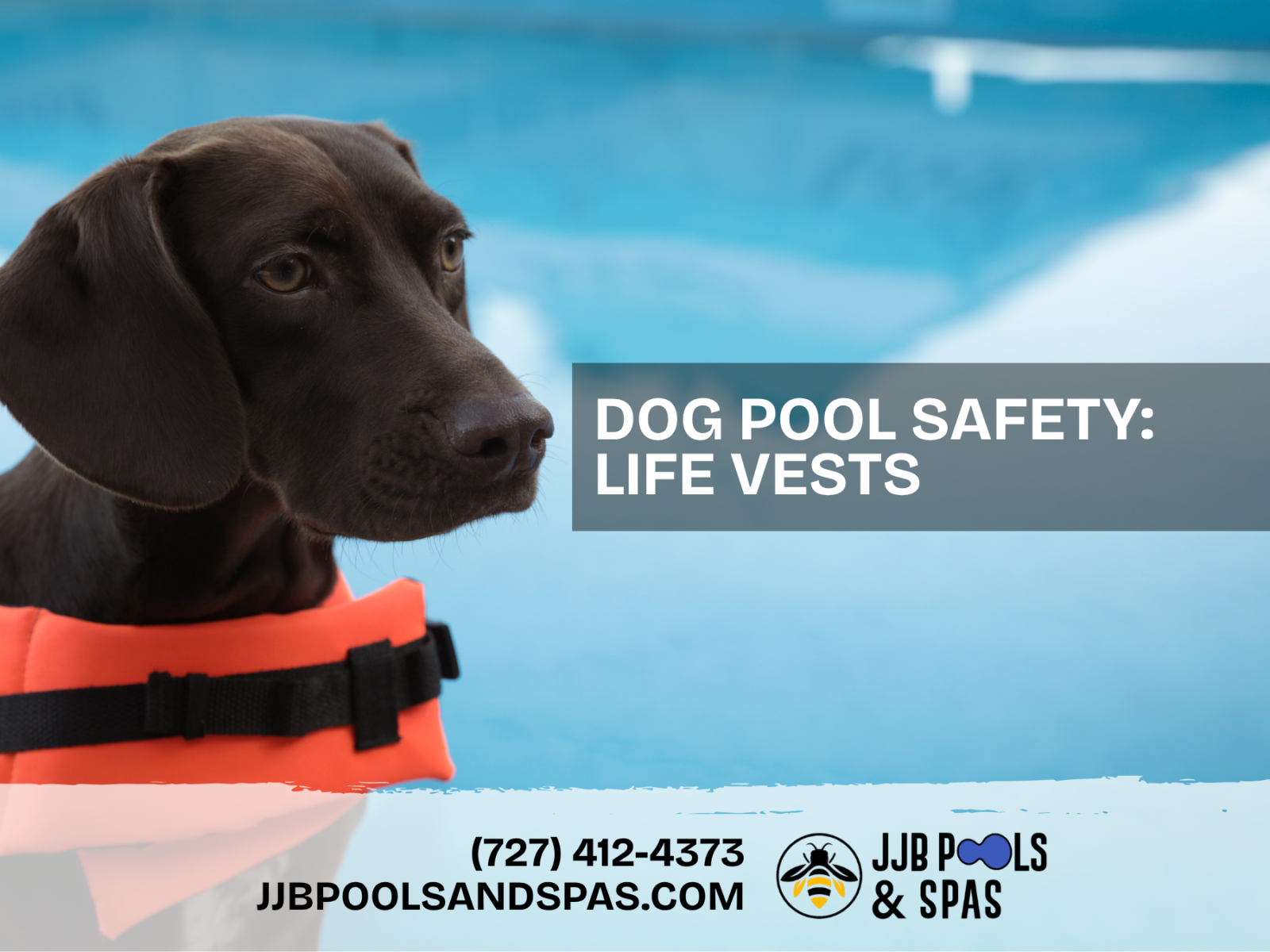
Dog Pool Safety: Why Every Tampa Bay Pool Owner Should Have a Dog Life Vest
Why Every Pool Family Should Have a Dog Life Vest on Hand
In this issue: Do I need a life vest for my dog? How do I choose a good dog life vest? What pool features will help my pets stay safe? What are the biggest pool hazards for pets?
For many families, dogs are more than pets—they’re part of the family. If your dog enjoys spending time outdoors with you, chances are they’ll eventually find their way into the pool. While many dogs can swim naturally, that doesn’t mean they are always safe in the water.
In Florida, dogs spend more time outdoors and around water than in many other parts of the country. Between backyard pools, canals, beaches, lakes, and boats, pets have frequent access to water year-round. That increased exposure naturally increases the risk of accidents.
Whether your dog is a daily swimming companion or an occasional poolside visitor, having a properly fitted life vest available can provide an extra layer of safety and peace of mind.
While no national database tracks pet pool accidents, veterinarians and animal safety experts agree that the most common cause of pool-related pet emergencies is a dog becoming unable to locate the pool steps after entering the water.
Can All Dogs Swim?
One of the biggest misconceptions about dogs and water is that all dogs are strong swimmers. While many breeds instinctively paddle, not every dog is built for swimming.
Short-legged breeds, senior dogs, puppies, overweight dogs, and dogs with certain medical conditions may tire quickly or struggle to stay afloat. Even athletic dogs can become exhausted after extended play in the pool.
A dog life vest helps support their body, conserve energy, and keep their head above water if they become fatigued.
Just because a dog can swim doesn’t mean they’re safe in the pool. Bulldogs, Pugs, Dachshunds, Corgis, and many senior dogs often benefit from wearing a life vest, especially during long swim sessions or when boating with their families.
Short-Nosed (Brachycephalic) Breeds
These dogs have shorter airways and heavier front ends, making it harder to keep their heads above water.
Bulldog French Bulldog Pug Boston Terrier Boxer Shih Tzu Pekingese
Short-Legged Breeds
These dogs often have to work much harder to stay afloat because of their body shape.
Dachshund Basset Hound Corgi
Heavy-Chested Breeds
Their body weight distribution can make it difficult to maintain a comfortable swimming position.
Bull Terrier Staffordshire Bull Terrier American Bully
Giant Breeds
While some can swim, they tire more quickly and can be difficult to rescue if they become exhausted.
Mastiff Great Dane Saint Bernard
Not Just About Breed
Even strong swimming breeds can struggle due to:
Age (puppies and seniors)
Arthritis or joint problems
Obesity
Vision impairment
Heat exhaustion
Lack of experience in water
Some of the best-known swimming breeds include Labrador Retriever, Golden Retriever, Portuguese Water Dog, and Newfoundland, but even these dogs should be supervised around pools.
Pools Can Be Confusing for Dogs
Many dogs can jump into a pool, but not all dogs know how to get out.
In moments of excitement or panic, a dog may repeatedly swim along the pool edge without locating the steps, leading to exhaustion. A life vest provides additional buoyancy, giving your dog more time and energy to find a safe exit.
For new pool owners, it’s also important to teach your dog where the pool steps or tanning ledge are located and practice exiting the pool several times.
A Resting Place in the Water
Just like people, dogs can become tired while swimming. A tanning ledge provides a shallow area where they can:
Stand comfortably
Rest without fully exiting the pool
Cool off on hot Florida days
Regain energy before continuing to swim
This can be especially beneficial for senior dogs and breeds that tire easily.
Easier Pool Exit Recognition
One of the biggest risks for dogs is not knowing how to get out of the pool. Many dogs instinctively swim to the edge and continue pacing along the wall rather than locating the steps.
A wide tanning ledge creates a highly visible “safe zone” that is often easier for dogs to recognize and access than traditional pool steps alone.
Confidence Builder for New Swimmers
Some dogs are hesitant around water. A shallow ledge allows them to:
Enter the water gradually
Get comfortable at their own pace
Learn where the exit area is located
This can reduce panic if they accidentally fall into the pool.
Great for Older Dogs
Dogs with arthritis or mobility issues may struggle with steep pool steps. A tanning ledge offers:
Easier entry and exit
Reduced strain on joints
A comfortable place to cool off without swimming
Senior Dogs Need Extra Support
Many Tampa Bay homeowners have aging pets that still love spending time outdoors. Swimming can be a wonderful low-impact exercise for senior dogs because it reduces stress on joints and muscles.
A life vest can help older dogs enjoy the water more comfortably by supporting their body and reducing fatigue during swim sessions.
Pool Parties Mean More Distractions
Summer pool parties, barbecues, and family gatherings create lots of excitement. With people talking, children playing, and guests coming and going, it can be easy to lose track of a pet’s activity around the pool.
A brightly colored life vest makes your dog more visible in the water and can provide valuable flotation if they accidentally fall in while everyone is distracted.
It’s Not Just for the Pool
A dog life vest is one of those items that often proves useful beyond the backyard.
Many Tampa Bay families enjoy:
Boating
Kayaking
Paddleboarding
Fishing trips
Beach outings
Lake vacations
Having a life vest already sized and ready for your dog means you’re prepared for water adventures year-round.
Not all dog life vests are created equal. If your dog spends time around the pool, on a boat, at the beach, or kayaking with the family, choosing the right vest can make a big difference in both comfort and safety.
Proper Fit Comes First
The most important feature is a proper fit. A vest that is too loose can slip off in the water, while one that is too tight may restrict movement or breathing.
When shopping for a dog life vest:
Measure your dog’s chest girth (widest part of the rib cage).
Measure neck circumference.
Check your dog’s weight against the manufacturer’s sizing chart.
Adjust straps so the vest is snug but not restrictive.
A good rule of thumb: You should be able to fit two fingers between the straps and your dog’s body.
Strong Grab Handle
One of the most valuable features is a sturdy handle on top of the vest.
This allows you to:
Help your dog out of the pool.
Lift them onto a boat or paddleboard.
Quickly assist them if they become tired.
Pull them to safety during an emergency.
For larger dogs, look for reinforced handles with strong stitching.
High Buoyancy
A quality life vest should provide enough flotation to keep your dog’s body level in the water.
Look for:
Foam flotation panels
Support under the chest and belly
Buoyancy designed specifically for dogs
Avoid products marketed as flotation aids if they do not provide substantial buoyancy.
Bright Colors and Reflective Strips
Visibility matters.
Choose bright colors such as:
Orange
Yellow
Red
Lime green
Reflective trim can make your dog easier to spot during evening walks, boating trips, or cloudy weather.
Front Float Support
Many premium life vests include a flotation panel under the chin.
This feature helps:
Keep your dog’s head above water.
Improve swimming posture.
Assist short-nosed breeds like Pug and French Bulldog that may struggle to keep their face elevated.
Durable Buckles and Straps
Look for:
Heavy-duty buckles
Adjustable straps
Reinforced stitching
Corrosion-resistant hardware
Pool chemicals, saltwater, and sun exposure can wear down lower-quality materials over time.
Comfortable Movement
A good vest should allow your dog to:
Walk naturally
Sit comfortably
Swim without restriction
Check that the vest does not rub under the front legs or restrict shoulder movement.
Quick-Drying Materials
Florida pool owners know that wet gear can stay damp for hours.
Look for:
Mesh drainage panels
Quick-drying fabrics
Breathable construction
These features help prevent skin irritation and reduce odors.
Special Considerations for Pool Dogs
If your dog primarily uses a backyard pool, consider a vest with:
A large rescue handle
Bright visibility colors
Extra chest flotation
Lightweight design for frequent use
Even dogs that are strong swimmers can become tired, especially during long summer play sessions.
Don’t Forget Training
A life vest is an important safety tool, but it should not replace supervision.
Every pool dog should learn:
Where the pool steps are located
How to enter and exit safely
To come when called out of the water
Practice these skills regularly, especially with puppies and newly adopted dogs.
Bottom Line
The best dog life vest is one that fits properly, provides adequate buoyancy, and includes a strong grab handle for emergencies. Whether you have a senior dog, a puppy, a short-legged breed, or simply a water-loving companion, a quality life vest can help make pool time safer and more enjoyable for everyone. 🐾🏊♂️
Additional Pool Safety Tips for Dogs
If your dog spends time around your swimming pool, remember these simple safety practices:
Teach your dog how to enter and exit the pool safely.
Never leave pets unattended around water.
Keep fresh drinking water nearby to discourage drinking pool water.
Rinse chlorine or saltwater from your dog’s coat after swimming.
Consider installing pool alarms, safety fences, or self-closing gates.
Keep a pet life vest accessible near your pool equipment or outdoor storage area.
Design Features That Help Dogs Most
If you’re designing a pet-friendly pool, consider:
A large tanning ledge (at least 6–12 inches deep)
Non-slip pool finishes
Wide entry steps connected to the ledge
Good visibility from the house
Shade nearby for cooling breaks
Many Tampa Bay homeowners who regularly swim with their pets also choose:
Automatic pool covers
Self-closing pool gates
Pool alarms
Wide beach entries
Clearly visible steps with contrasting tile markers
A Safe Pool Is a Family Pool
At JJB Pools & Spas, we know that pools bring families together—including the four-legged family members. A little preparation goes a long way toward creating a safer backyard environment for everyone.
Keeping a dog life vest nearby may seem like a small step, but it could make a big difference during an unexpected situation. As pool owners, we invest in safety equipment for children and guests. Our pets deserve the same consideration.
After all, the best pool memories are the ones where every member of the family gets to enjoy the fun safely.
Bonus Tip for Tampa Bay Pool Owners
Keep your dog’s life vest stored near your pool safety equipment. Just as you wouldn’t wait for an emergency to look for a life ring, having the vest readily available means you’re prepared whenever your four-legged family member decides it’s time for a swim.
FAQ Section
Do dogs need life jackets in swimming pools?
While many dogs can swim naturally, a life jacket provides extra flotation, helps prevent exhaustion, and increases safety for puppies, seniors, and less confident swimmers.
What dog breeds benefit most from a life vest?
Short-legged breeds, brachycephalic breeds (such as Bulldogs and Pugs), senior dogs, puppies, and overweight dogs often benefit the most from wearing a life vest around water.
Can dogs accidentally drown in a pool?
Yes. Dogs can become tired, disoriented, or unable to locate pool steps. A life vest helps keep them afloat while they find a safe exit.
Should dogs wear life jackets in saltwater pools?
A life vest can be beneficial in both saltwater and traditional chlorine pools, especially during long swim sessions or for dogs that are not strong swimmers.
How can I make my swimming pool safer for my dog?
Teach your dog where the pool steps are, supervise them around water, provide fresh drinking water, install pool barriers when needed, and keep a properly fitted life vest available.